Bright clusters, powerful multipliers and free spins — every spin here brings real excitement. Register on any of our partner sites below and get extra deposit funds and free spins (FS) as your welcome bonus.

A solid Sugar Rush strategy isn’t about beating the random number generator — that’s not possible with any licensed slot. It’s about managing bankroll, bet size, and session pacing in a way that matches the game’s high volatility, so a long dry stretch doesn’t wipe out a budget before the cascading multiplier system gets a chance to deliver. This guide walks through every practical component of a well-structured Sugar Rush strategy, from bankroll allocation to session tracking, with the reasoning behind each recommendation.
Understanding Cluster Mechanics Before Building a Sugar Rush Strategy
Before any bankroll or betting plan makes sense, it helps to understand what actually drives variance in this game. The Sugar Rush slot uses a 7×7 grid and a cascading cluster pays system, where matched groups of symbols explode and are replaced by new symbols falling into place, sometimes triggering several consecutive wins from a single spin. A Sugar Rush strategy has to account for this cascading structure directly, because it changes how bet sizing and session length should be approached compared to a standard reel-based slot.

1xBet
🎁 Up to +500% bonus on first deposit
🎰 +250 free spins
📈 High odds on sports
💸 Fast payouts and cashback

MelBet Casino
🎁 Welcome package up to ₽150,000
🎰 Up to +290 FS on top slots
💸 Cashback and bonuses on repeat deposits
⚡️ Fast games, crash and live casino

1xSlots
🎁 100% up to €150 on deposit
🎰 Up to 100 FS on slots
💸 Up to 10% cashback
🔥 VIP tier + tournaments

MostBet Casino
🎁 Up to +100%–250% bonus
🎰 Up to 250 FS
💰 Deposit bonus
💸 Up to 10% cashback
Why Cluster Pays Changes Bet Sizing Logic
In a traditional payline slot, each spin is typically resolved once. In a cluster pays format, a single spin can trigger multiple cascades, each with its own win calculation and potential multiplier contribution from the bomb symbol. This means the effective volatility per spin is higher than the base RTP alone suggests, which is the core reason a Sugar Rush strategy needs to treat bankroll planning as a bigger priority than it might be for a lower-volatility title.
Bankroll Management Principles for Sugar Rush Strategy
Bankroll management is the foundation of any Sugar Rush strategy, since the game’s high volatility means winning stretches and dry stretches can both run longer than expected. A widely used guideline among experienced players is to risk no more than 5% of a total bankroll in any single session, which allows enough spins to reach a meaningful sample size without exposing the full budget to one unlucky run.

Bankroll Allocation by Budget Size
The table below illustrates how this 5% guideline translates across different overall bankroll sizes, along with the approximate number of spins that allocation typically supports at a proportionally scaled bet.
| Total Bankroll | Recommended Session Budget (5%) | Approximate Spin Count |
|---|---|---|
| $50 | $2.50 | 100–150 spins |
| $100 | $5.00 | 100–150 spins |
| $250 | $12.50 | 100–150 spins |
| $500 | $25.00 | 100–150 spins |
Notice that the spin count stays roughly consistent across bankroll sizes — that’s intentional. A larger bankroll under this approach doesn’t mean playing more spins, it means playing at a proportionally higher bet size while keeping session structure the same.
Bet Sizing: A Step-by-Step Approach
Choosing a bet size is one of the more consequential decisions in any Sugar Rush strategy, since it directly affects both session length and the meaningfulness of any multiplier the bomb symbol generates. The following sequence outlines a practical way to settle on a starting bet:
- Calculate the session budget as roughly 5% of the total bankroll set aside for play.
- Divide that session budget by a target spin count of at least 100, to establish a baseline maximum bet per spin.
- Start the session at or slightly below that baseline bet to leave room for adjustment.
- If the bomb symbol and multipliers begin appearing with noticeable frequency, consider increasing the bet incrementally rather than all at once.
- If the session produces a long stretch without meaningful clusters, resist the urge to increase bet size in an attempt to “catch up.”
This structure keeps bet sizing tied to a defined process rather than an emotional reaction to recent spins, which is one of the more common ways sound planning breaks down mid-session.
Multiplier Timing Tactics Within a Sugar Rush Strategy
The bomb symbol’s multiplier mechanic is the single biggest swing factor in this game’s payout potential, and while its appearance is fully random, there are still tactical considerations worth building into a Sugar Rush strategy around how to respond when it shows up:
- Avoid changing bet size mid-cascade — multipliers apply to whatever bet was active when the spin started, so adjustments only take effect on the next spin.
- Treat a bomb symbol appearance as a signal to maintain rather than immediately increase bet size, since its frequency doesn’t predict whether another will follow soon after.
- Pay attention to how many bomb symbols land within the same cascade sequence, since their multiplier values stack rather than replace one another.
- Remember that a modest cluster combined with a strong multiplier chain can outperform a larger cluster with no multiplier involvement at all.
None of these tactics change the underlying odds, but they help ensure that when a multiplier-heavy cascade does occur, the bet size in play is one that makes the resulting win meaningful rather than incidental.
Adapting a Sugar Rush Strategy for Mobile Play
Playing on a phone changes a few practical dynamics worth factoring into session planning. Screen size makes it harder to track the grid during a fast cascade sequence, which can lead to missing visual cues about how a chain is developing. On a smaller display, it’s easy to lose track of which symbols just exploded and which ones are new, especially during a rapid multi-step cascade where the board changes several times within a few seconds.
Shorter, more frequent mobile sessions tend to work better than long ones, since attention naturally drifts during extended play on a small screen. A 15-20 minute mobile session tends to stay focused, while pushing past 45 minutes on a phone often leads to distracted play — checking notifications mid-spin, losing count of the session timer, or simply not noticing when a stop-loss threshold has already been crossed.
Battery life and connection stability are also worth considering, since an interrupted spin mid-cascade can create confusion about whether a bet actually registered. Playing on Wi-Fi rather than mobile data, and keeping the device plugged in during longer sessions, removes two avoidable sources of friction that have nothing to do with the game’s actual mechanics but can still derail a carefully planned session.
Session Planning and Time Limits
Because the Sugar Rush slot can produce long stretches without a significant win, session length needs to be planned with the same discipline as bankroll. Sessions capped between 30 and 40 minutes are generally recommended, giving enough time to evaluate the game’s behavior without extending exposure during an extended dry period.
Recommended Session Length by Bet Level
| Bet Level | Recommended Session Length | Session Character |
|---|---|---|
| Low | 45–60 minutes | Extended, steady pacing |
| Medium | 30–40 minutes | Balanced risk and duration |
| High | 15–20 minutes | Short, high variance |
Using an external timer — a phone alarm or a browser extension — removes the guesswork of tracking elapsed time manually, which matters more than it sounds during a fast-paced cascading session where minutes can pass unnoticed.
Stop-Loss and Take-Profit Rules
A stop-loss is a predefined point at which a session ends regardless of how the player feels in the moment, and a take-profit is the equivalent threshold on the winning side. Both are essential components of a disciplined Sugar Rush strategy, particularly because a single strong multiplier cascade can create a false sense of momentum that leads to overplaying a session that should have already ended.
Setting Practical Stop-Loss and Take-Profit Levels
- Decide on a stop-loss amount before the session starts — commonly 100% of the session budget, meaning the session ends if that full amount is lost.
- Set a take-profit target, often between 2x and 3x the session budget, as the point at which the session ends regardless of how the game “feels.”
- Write both numbers down or set them as explicit reminders, since verbal intentions are easy to abandon mid-session.
- Once either threshold is hit, close the session — treat this as a non-negotiable rule rather than a suggestion.
- After a large win, consider setting aside a portion of it before continuing, so a subsequent losing stretch doesn’t erase the entire result.
These thresholds don’t need to be complicated to be effective — the value comes from deciding them in advance, before the emotional pull of an active cascade sequence can influence the decision.

Free Spins Strategy Considerations
The free spins round is where the Sugar Rush slot’s multiplier accumulation reaches its highest potential, since values generated during this mode persist and stack across the entire round rather than resetting after each spin. A few tactical points are worth keeping in mind specifically for this feature:
- Confirm the bet size before the free spins round triggers, since it cannot be changed once the feature has started.
- Understand that early multipliers in a free spins round carry forward, meaning a strong start compounds meaningfully by the round’s end.
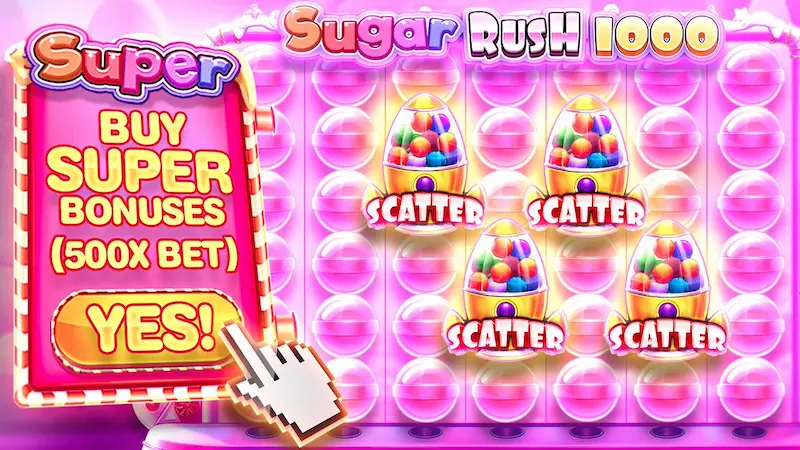
- If a feature buy option is available, treat it as a separate, clearly budgeted expense rather than drawing from the same funds allocated to base game spins.
- Avoid judging a single free spins round’s outcome as representative — variance within this feature is naturally high even across a large sample of triggers.
Volatility-Adjusted Bankroll Planning
Because the Sugar Rush slot sits in the high volatility category, bankroll planning benefits from being adjusted relative to lower-volatility alternatives a player might be more used to. The table below compares recommended bankroll depth across volatility tiers, measured in number of minimum-bet spins a session should be able to sustain.
| Volatility Tier | Recommended Spin Depth | Bankroll Implication |
|---|---|---|
| Low volatility | 50–75 spins | Smaller reserve needed |
| Medium volatility | 75–100 spins | Moderate reserve needed |
| High volatility (Sugar Rush) | 100–150 spins | Larger reserve recommended |
This deeper spin depth requirement is one of the more overlooked aspects of a Sugar Rush strategy — players coming from lower-volatility titles often underestimate how much bankroll depth this game’s variance actually calls for.
Does the Time of Day Affect Session Outcomes?
No — the random number generator behind Sugar Rush operates independently of the clock, the day of the week, or any external timing signal. A session started at 2am carries exactly the same underlying odds as one started at 2pm, and there is no mechanism by which the game’s server could adjust outcomes based on when a player logs in. Any pattern that seems to suggest otherwise — “mornings feel luckier,” “weekends pay better” — is a coincidence built from a small, biased sample of memorable sessions.
What does change with time of day is the player’s own state: fatigue, distraction, and impulsivity tend to be higher late at night or after a long day, which affects decision-making quality even though it doesn’t affect the game itself. A tired player is more likely to skip the pre-session planning steps, extend a session past its planned stop point, or misjudge how a cascade sequence is actually developing.
For that reason, scheduling sessions during periods of alertness rather than exhaustion is a practical habit, even though it has nothing to do with the mechanics of the slot itself. Treating session timing as a matter of personal readiness rather than in-game superstition keeps the decision-making process grounded in something that actually matters.
Feature Buy vs Natural Trigger: A Comparison
Some operators offer a feature buy option that lets a player pay a set fee to enter the free spins round directly, bypassing the need to land scatter symbols naturally. Deciding whether this fits into a given Sugar Rush strategy depends on session goals and bankroll depth.
| Approach | Cost Structure | Best Suited For |
|---|---|---|
| Natural trigger | Spread across base game spins | Longer sessions, steady bankroll use |
| Feature buy | Fixed upfront cost per entry | Shorter sessions, larger dedicated budget |
Feature buy access doesn’t change the underlying odds within the round itself, but it does concentrate risk into fewer, larger decisions rather than spreading it across many smaller ones — a distinction worth weighing carefully before including it as a regular part of a session plan.
Autoplay Precautions
Autoplay can be a convenient feature, but it removes the manual pacing that naturally slows down decision-making between spins. Within a disciplined Sugar Rush strategy, autoplay should be used cautiously:
- Set a stop-on-loss-limit and stop-on-win-limit before activating autoplay, since most platforms support these parameters directly.
- Avoid using autoplay during the first sessions with this game, since it’s easier to misjudge pacing before understanding the cascade rhythm firsthand.
- Periodically check in on an autoplay session rather than letting it run fully unattended, particularly during longer sequences.
- Treat autoplay as a pacing tool, not a way to disengage from the session’s predefined stop-loss and take-profit rules.
How Deposit Bonuses Interact with a Sugar Rush Strategy
Welcome bonuses and reload offers can extend playable bankroll, but they typically come with wagering requirements that must be cleared before any winnings can be withdrawn. A Sugar Rush strategy built around a bonus needs to factor in the wagering multiple, since high-volatility titles can make it harder to clear a requirement smoothly compared to lower-volatility games where wins arrive more predictably across the wagering period.
Reading the specific terms — including whether cluster pays slots are weighted at 100% toward wagering, and whether there’s a maximum bet cap while a bonus is active — prevents the bonus from accidentally being voided partway through a session. Some operators reduce the contribution percentage for high-volatility titles specifically, which changes how much of the wagering requirement a given session actually clears.
It also helps to separate bonus funds from personal deposit funds mentally, even if the platform doesn’t do so automatically. Treating bonus-funded spins as a distinct pool with its own stop-loss consideration avoids the confusion of not knowing, mid-session, whether a loss is coming out of the operator’s promotional balance or the player’s own money.

Keeping a Session Log
Tracking outcomes over time turns a Sugar Rush strategy from a set of one-off decisions into a system that can actually be refined. A simple log doesn’t need to be complicated — the table below outlines the core fields worth recording after each session.
| Field | Purpose |
|---|---|
| Session date | Tracks frequency and spacing of play |
| Starting budget | Baseline for calculating session result |
| Bet size used | Correlates outcomes with bet level over time |
| Session duration | Flags sessions that ran longer than planned |
| Result (win/loss amount) | Core data point for long-term evaluation |
Over several sessions, this kind of record reveals patterns that are difficult to notice in the moment — which bet sizes and session lengths tend to produce more stable outcomes, and whether stop-loss or take-profit limits are actually being respected in practice.
Simple Tools for Tracking a Session Log
A session log doesn’t require specialized software. A basic spreadsheet with columns for date, starting budget, bet size, and result covers the essentials, and a notes app on a phone works just as well for quick entries immediately after a session ends. The format matters far less than the habit of actually filling it in every single time, rather than only when a session feels noteworthy.
The key is consistency — recording every session, not just the memorable wins or losses, since selective logging skews the picture over time. A log that only contains entries from unusually good or unusually bad sessions ends up telling a distorted story, making the game look either more generous or more punishing than it actually is across a realistic sample.
Some players prefer a simple paper notebook specifically because it removes the temptation to open a betting app “just to check” something mid-session, which can turn a quick glance into an unplanned extra session. Writing by hand also adds a small amount of friction that encourages more honest, deliberate entries compared to quickly tapping numbers into a phone.

Six Common Mistakes That Undermine a Sugar Rush Strategy
Even a well-planned approach can break down in execution. The following mistakes come up repeatedly among players applying strategy to high-volatility cluster pays slots:
- Increasing bet size after a losing stretch in an attempt to recover losses faster, rather than sticking to the pre-planned bet level.
- Ignoring the session time limit because the game “feels close” to a big cascade, which is not something the RNG tracks or responds to.
- Treating a single free spins round’s outcome as a meaningful sample rather than one data point among many.
- Skipping the demo mode entirely and learning the cascade rhythm using real-money spins instead.
- Using autoplay without setting stop-on-loss or stop-on-win parameters beforehand.
- Continuing to play immediately after hitting the take-profit threshold, effectively erasing the discipline the limit was meant to enforce.
Most of these mistakes share a common thread — they involve abandoning a pre-set rule in response to in-the-moment emotion, which is precisely the scenario stop-loss, take-profit, and session limits are designed to prevent.
Sugar Rush Slot: Complete Game Guide
RTP, grid mechanics, the bomb multiplier, and free spins explained in full detail.
Read the Full Guide →Comparing a Sugar Rush Strategy to Approaches for Other Cluster Slots
Many of the bankroll and session-pacing principles here transfer reasonably well to other high-volatility cluster pays titles, since the underlying math — independent spins, RNG-driven multipliers, stop-loss discipline — applies broadly across the category. The core logic of risking a small percentage of bankroll per session, planning for extended dry stretches, and setting limits in advance isn’t unique to this one game.
What doesn’t transfer directly are the specific numbers: spin depth recommendations, feature trigger frequency, and multiplier scaling vary by title and should be re-checked against each game’s own published RTP and volatility rating rather than assumed to be identical. A title with a rarer bonus trigger, for instance, would need a deeper recommended spin count than the one outlined here.
Treating this guide as a framework to adapt, rather than a fixed set of numbers to copy onto a different slot, keeps the underlying logic sound even when the specific game changes. The habits — bankroll discipline, deliberate bet sizing, predefined limits — are the portable part; the exact percentages and spin counts are the part that should flex per title.
Sugar Rush Strategy: Frequently Asked Questions
A common approach is to keep a single spin at roughly 1% or less of the session budget, not the total bankroll. If a session budget is $5, that puts a reasonable bet size around $0.05, which supports the 100+ spin depth this strategy recommends.
Several shorter sessions generally fit a Sugar Rush strategy better than one extended sitting, since each session gets its own stop-loss and take-profit reset. This prevents an early loss in a long session from psychologically bleeding into hours of chasing.
No. The bomb symbol’s appearance rate is governed by the random number generator and is not tied to bet size. Betting higher increases what a given multiplier is worth in absolute terms, but it does not make the bomb symbol land more frequently.
No — increasing bet size specifically to recover losses is one of the most common mistakes in high-volatility cluster pays strategy. Each spin is independent, so a cold streak has no bearing on the next spin, and raising bets in response only increases exposure without improving the odds.
The limit should be treated as fixed once the session starts. The RNG has no memory of prior spins, so no sequence of spins makes a big cascade more or less “close.” Adjusting a stop-loss in the moment defeats its purpose as a pre-commitment device.
A feature buy guarantees entry into the free spins round, not a strong outcome within it. Variance inside the round remains just as high as a naturally triggered one, so it should be budgeted as a separate, optional expense rather than treated as a shortcut to a bigger win.
Psychological Discipline During High-Volatility Sessions
Long stretches without a meaningful win are a normal, expected part of playing a high-volatility title, not a sign that something is wrong with the game or that a win is somehow “overdue.” Recognizing early signs of tilt — impulsively raising bets, chasing losses, or repeatedly telling yourself “just one more spin” — is one of the more valuable skills a Sugar Rush strategy can build over time. The moment any of these patterns appear, the most effective response is usually a short break rather than continued play.
Framing the game as entertainment rather than a source of guaranteed income also plays a meaningful role in maintaining discipline. This mindset doesn’t change the math behind the RNG, but it does change how a player responds emotionally to both winning and losing stretches, which in practice has a much larger effect on session outcomes than any specific betting tactic.




Sugar Rush Strategy: Summary
A sound Sugar Rush strategy rests on a handful of interconnected habits: allocating bankroll in proportion to the game’s high volatility, choosing a bet size deliberately rather than reactively, setting stop-loss and take-profit limits before a session begins, and tracking results over time to refine future decisions. None of these habits guarantee a winning outcome, since the underlying result of every spin remains governed by an independently certified random number generator. What they do provide is a structured, repeatable framework that keeps sessions controlled and intentional, even during the extended dry stretches that come with playing a high-volatility cluster pays title.
Players who haven’t yet reviewed how the underlying mechanics work — including the grid structure, cascade sequence, and multiplier system this strategy is built around — can find a full technical breakdown in the main Sugar Rush slot guide.